
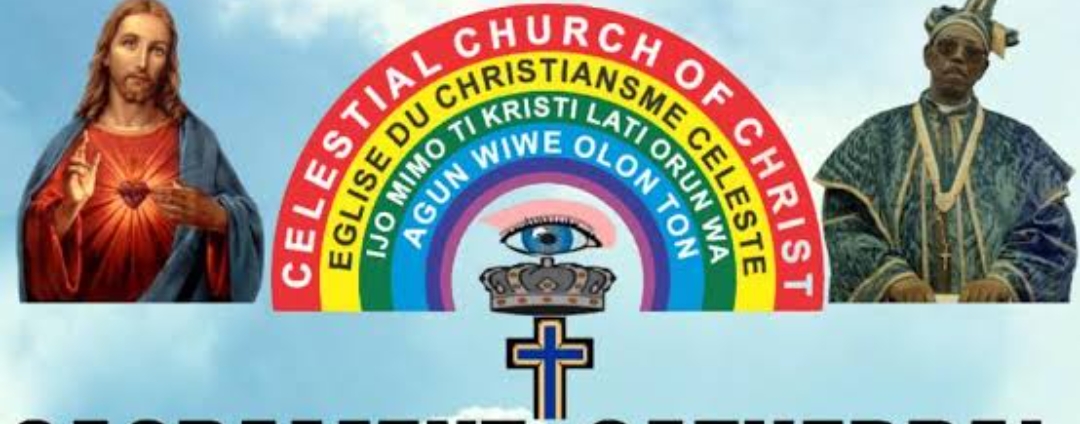
Samuel Bilehou Joseph Oshoffa, born on May 19, 1909, in Porto-Novo, Dahomey (now Benin), came into the world surrounded by a complex web of religious and cultural influences. His father, a carpenter originally a Muslim, converted to Methodism, while his mother, who practiced traditional African religions, rejected Christianity. At just three months old, his mother left him in the care of his father and returned to Imeko, where her husband lived. This early separation became the foundation of Oshoffa’s spiritual journey, setting him on a path to divine revelation and a profound calling.
Oshoffa’s upbringing was steeped in diverse religious practices, which would play a significant role in shaping his future. His father’s work as a carpenter, and his family’s ties to the Cherubim and Seraphim Church, further influenced his spiritual development. It was clear from a young age that Oshoffa was destined for something greater, though the true nature of his calling would not be fully realized until later in his life.
In 1947, while working in the ebony trade, Oshoffa received a transformative spiritual vision. After becoming lost in the forest while searching for the right tree, he lived off the land for three months. During this time, he had an extraordinary divine encounter. On May 23, 1947, during a solar eclipse, he heard a voice say “LULI,” interpreted as “The Grace of Jesus Christ.” Upon opening his eyes, Oshoffa saw a white flying monkey with bat-like wings, a yellow bird with a peacock-like tail, and a short snake resembling a cobra. These creatures were not sources of power, as some have misinterpreted, but rather symbolic of the challenges humanity and the church would face. They represented spiritual obstacles that had to be overcome for the church to fulfill its divine mission.
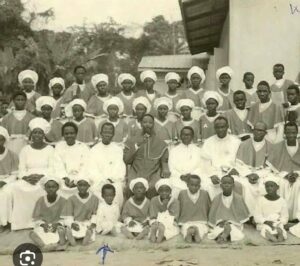
This vision marked the beginning of Oshoffa’s public ministry. His first reported miracle, the resurrection of his nephew, helped establish his reputation as a powerful healer and prophet. The event led to the conversion of his elder sister, Elizabeth, and the nephew himself would become the first prophet of the newly founded church. Over the years, Oshoffa continued to perform numerous miracles, healing the sick, raising the dead, and prophesying with remarkable accuracy. His ability to heal a mad woman in Yaba, Lagos, was one of the most widely witnessed acts of divine intervention, although some doubted the authenticity of the miracle. Despite skepticism, the church grew rapidly, drawing followers across West Africa and eventually spreading worldwide.
Oshoffa’s family played a crucial role in his ministry, particularly his first wife, Felicia Yaman, known for her own prophetic abilities. She was a trusted spiritual guide, often present at Oshoffa’s gatherings, helping him navigate spiritual revelations and conflicts within the church. Their home, blessed with 13 wives and 53 children, was a symbol of love, unity, and spiritual commitment—a reflection of Oshoffa’s teachings about the harmonious structure of divine family life.
In 1958, after years of resistance from local authorities, the Celestial Church of Christ was officially recognized in Nigeria, marking a significant milestone in Oshoffa’s ministry. The church’s influence continued to spread globally, with millions of followers and a growing reputation for its teachings on prophecy, healing, and spiritual discipline. Oshoffa’s leadership remained central to the church’s identity, and his authority was absolute. His teachings, especially his emphasis on the prophetic and healing gifts, became the cornerstone of the Celestial Church’s mission.
Oshoffa’s life and works are a testament to his unwavering faith and his divine calling. His spiritual journey and miracles were not for personal glory, but to lead humanity toward salvation. The church he founded became known as the “last boat of salvation,” a place where believers could experience the grace of Jesus Christ through prophecy, healing, and spiritual renewal. His profound vision of salvation and healing continues to guide millions around the world.
However, Oshoffa’s passing on September 10, 1985, after a tragic car accident, left the church facing a crisis of succession. His death caused confusion, as his central authority had been the foundation of the church’s unity. In the wake of his death, Alexander Abiodun Bada was appointed as his successor by the church trustees. At the same time, Benoit Agbaosi was chosen by the supreme headquarters in Porto-Novo to lead the global church. The transition was not without challenges, but the Celestial Church of Christ endured, continuing to grow and thrive in the years following Oshoffa’s death.
The church’s leadership structure was also formalized after Oshoffa’s passing. While shepherds had previously been appointed through spiritual revelation and served as apprentices under established leaders, a seminary was established to train clergy, ensuring that the church’s teachings and traditions would be upheld for future generations. Today, the Celestial Church of Christ remains a vibrant spiritual institution with millions of followers worldwide, carrying on the legacy of its founder, Pa Samuel Bilehou Joseph Oshoffa.
Oshoffa’s legacy is not merely one of miraculous deeds or prophetic visions, but a living testament to a divine calling that transcends time and space. His life is a beacon of faith, a reminder that through unwavering devotion and spiritual discipline, humanity can rise above its earthly struggles and fulfill God’s divine plan. The Celestial Church of Christ, grounded in his vision and teachings, continues to spread the gospel of salvation, offering a place of healing, renewal, and divine grace for all who seek the light of Christ.